

TIME:2017-10-11 Source: This site
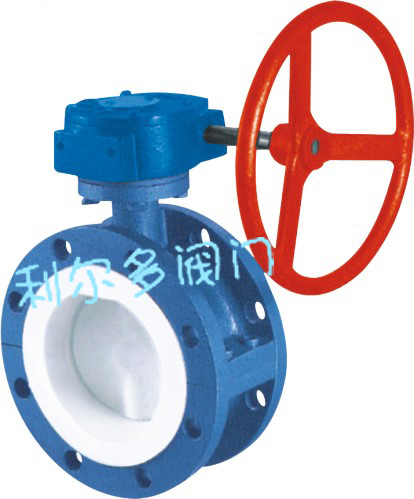
Fluorine lined valve The practice of only specifying specifications, categories, and work pressure to meet procurement requirements during procurement is incomplete in the current market economy environment. because Fluorine lined valve factory In order to compete in products, each family has carried out different innovations under the concept of unified valve design, forming their own enterprise standards and product personalities. Therefore, it is necessary to provide detailed technical requirements during valve procurement, coordinate with the manufacturer to reach a consensus, and include them as attachments to the valve procurement contract.
1. General Requirements
a. The specifications and categories of valves should comply with the requirements of the pipeline design documents.
b. The model of the valve should indicate the national standard number requirements it is based on. If it is an enterprise standard, the relevant description of the model should be indicated.
c. The working pressure of the valve should be ≥ the working pressure of the pipeline. Without affecting the price, the working pressure that the valve can withstand should be greater than the actual working pressure of the pipeline; Either side of the valve should be able to withstand 1.1 times the valve working pressure without leakage when the valve is closed; When the valve is open, the valve body should be able to withstand twice the working pressure of the valve.
d. The valve manufacturing standard should specify the national standard number it is based on. If it is an enterprise standard, the procurement contract should be accompanied by the enterprise document.
Introduction to the use environment of fluorine lined valves by fluorine lined valve factories
2. Standard quality of fluorine lined valves
a. The valve body material should be mainly ductile iron, and the grade and actual physical and chemical testing data of the cast iron should be indicated.
b. The valve stem material should strive for stainless steel stem (2CR13), and large-diameter valves should also have stainless steel embedded stem.
c. The nut material is made of cast aluminum brass or cast aluminum bronze, and its hardness and strength are greater than those of the valve stem.
d. The material of the valve stem liner should have a hardness and strength not greater than that of the valve stem, and should not form electrochemical corrosion with the valve stem and valve body when immersed in water.
e. Material of sealing surface: ① Different types of valves have different sealing methods and material requirements; ② The material, fixing method, and grinding method of the copper ring for ordinary wedge gate valves should be specified; ③ Physical, chemical, and hygiene testing data for soft sealed gate valves and valve plate lining materials; ④ Butterfly valves should indicate the sealing surface material on the valve body and the sealing surface material on the butterfly plate; Their physical and chemical test data, especially the sanitary requirements, anti-aging performance and wear resistance of rubber; Usually, nitrile rubber and EPDM rubber are used, and the use of recycled rubber is strictly prohibited.
f. Valve shaft packing: ① Due to the infrequent opening and closing of valves in the pipeline network, the packing is required to remain inactive for several years, and the packing should not age, maintaining a long-term sealing effect; ② The valve shaft packing should also have good sealing performance when subjected to frequent opening and closing; ③ In view of the above requirements, the valve shaft packing should be kept unchanged for life or more than ten years; ④ If the packing needs to be replaced, the valve design should consider measures to replace it under water pressure conditions.
3. Transmission gearbox
a. The material of the box and the requirements for internal and external anti-corrosion are consistent with the principles of the valve body.
b. The box should have sealing measures and be able to withstand immersion in a 3-meter water column after assembly.
c. The adjustment nut of the opening and closing limit device on the box should be located inside or outside the box, but special tools are required for operation.
d. The transmission structure is designed reasonably, which can only drive the valve shaft to rotate during opening and closing, without causing it to move up and down. The transmission components are moderately engaged, and there is no separation slip during load opening and closing.
e. The gearbox and valve shaft seal should not be connected as a leak free whole, otherwise reliable anti leakage measures should be taken.
f. There are no impurities inside the box, and the gear meshing area should be protected with lubricating grease.
4. Operating mechanism of fluorine lined valve
a. The opening and closing direction of the valve during operation should always be clockwise.
b. Due to the frequent manual opening and closing of valves in the pipeline network, the opening and closing speed should not be too high, even for large-diameter valves, it should be within 200-600 revolutions.
c. For the convenience of one person's opening and closing operation, under the pressure of pipeline workers, a larger opening and closing torque should be 240N-m.
d. The valve opening and closing operation end should be square tenon, standardized in size, and facing the ground, so that people can directly operate it from the ground. Valves with discs are not suitable for underground pipelines.
e. The display panel for valve opening and closing degree: ① The scale line for valve opening and closing degree should be cast on the gearbox cover or the outer shell of the display panel after changing direction, facing the ground uniformly, and the scale line should be brushed with fluorescent powder to show visibility; ② The material of the indicator disk needle can be stainless steel plate under good management, otherwise it is painted steel plate and aluminum sheet should not be used for production; ③ The indicator pin should be conspicuous and securely fixed. Once the opening and closing adjustment is accurate, it should be locked with rivets.
f. If the valve is buried deep and the distance between the operating mechanism and the display panel and the ground is ≥ 1.5m, an extension rod facility should be installed and firmly fixed for people to observe and operate from the ground. That is to say, the opening and closing of valves in the pipeline network is not suitable for underground operations.
5. Performance testing of fluorine lined valves
a. When a certain specification of valve is mass-produced, authoritative institutions should be commissioned to conduct the following performance tests: ① the opening and closing torque of the valve under working pressure conditions; ② Under working pressure conditions, the continuous opening and closing times that can ensure the valve is tightly closed; ③ Detection of flow resistance coefficient of valves under pipeline water delivery conditions.
b. Valves should undergo the following tests before leaving the factory: ① When the valve is in the open position, the valve body should withstand an internal pressure test of twice the valve working pressure value; ② Under the closed condition of the valve, both sides can withstand 1.1 times the valve working pressure without leakage; But for metal sealed butterfly valves, the leakage value should not exceed the relevant requirements.
6. Internal and external anti-corrosion of fluorine lined valves
a. The inside and outside of the valve body (including the gearbox) should first be shot blasted, sandblasted, and rust removed, striving for electrostatic spraying of powder non-toxic epoxy resin with a thickness of at least 0.3mm. When it is difficult to electrostatically spray non-toxic epoxy resin on extra large valves, similar non-toxic epoxy paint should also be brushed or sprayed.
b. The interior of the valve body and various parts of the valve plate require anti-corrosion measures. On the one hand, immersion in water will not corrode, and there will be no electrochemical corrosion between the two metals; Smooth surface on both sides reduces water resistance.
c. The hygiene requirements for anti-corrosion epoxy resin or paint inside the valve body should be accompanied by testing reports from relevant authoritative authorities. The chemical and physical properties should also meet relevant requirements.
7. Packaging and transportation of fluorine lined valves
a. Lightweight blocking plates should be installed on both sides of the valve for secure sealing.
b. Small and medium-sized valves should be tied with grass ropes and transported in containers.
c. Large caliber valves also come with simple wooden frame solid packaging to prevent damage during transportation.
8. Factory instruction manual for fluorine lined valves
Valves are equipment, and the following relevant data should be indicated in the factory manual: valve specifications; model; working pressure; Manufacturing standards; Valve body material; Valve stem material; Sealing material; Valve shaft packing material; Material of valve stem shaft sleeve; Internal and external anti-corrosion materials; Operation startup direction; revolutions; Opening and closing torque under working pressure conditions; Manufacturer's name; date of production; Factory number; weight The aperture, number of holes, and center hole distance of the connecting flange; Indicate the control dimensions of overall length, width, and height in a graphical manner; Valve flow resistance coefficient; Effective opening and closing times; Relevant data of valve factory inspection and precautions for installation and maintenance.
Zhejiang Lierdao Valve Co., Ltd
Hotline 0577-86860737
Address:
No. 903, Jinhai 3rd Road, Longwan Airport New Area, Wenzhou, Zhejiang, China
Scan to Inquire:

Copyright © 2026 Zhejiang Lierduo Valve Co., Ltd. All Rights Reserved.
